The Lithic Veins of Cumbemayo: Hydraulic Architecture and Fluid Dynamics in Pre-Columbian Andean Civilization

High within the mist-shrouded volcanic crags of the northern Peruvian highlands near Cajamarca, carved directly into the unyielding basaltic stone more than two millennia ago, the Cumbemayo aqueduct stands as a monumental triumph of pre-Columbian hydraulic engineering that defies conventional paradigms of ancient technological development. Emerging from the archaeological strata ᴀssociated with the formative Cajamarca and pre-Chavín horizons circa 1500 BCE to 200 CE, this labyrinthine stone channel stretches for miles across treacherous, precipitous mountain topography, executing an intricate transnational diversion of glacial meltwater from the Atlantic watershed to the arid Pacific slopes. Historical excavation logs compiled from high-alтιтude surveys indicate that the creation of this subterranean and surface waterway required an extraordinary mastery of stone-working mechanics, wherein archaic artisans utilizing obsidian chisels and heavy stone hammers surgically sliced through solid volcanic rock with microscopic precision. These archival records substantiate that the aqueduct was not merely a utilitarian conduit for irrigation, but a sacred circulatory system conceived within a cosmological framework where water was worshipped as the life-giving blood of Pachamama, demanding absolute architectural symmetry and profound ecological integration.
The operational genius of this ancient waterway is most vividly manifested in its deliberate, geometric deviation from the laws of gravitational acceleration through a precise zigzag route characterized by sharp right-angled bends and calculated angular offsets. Rather than adhering to a straightforward, linear gradient down the steep volcanic declivity—which would have unleashed a torrential, destructive cascade of water—these ancient engineers engineered abrupt architectural breaks that systematically staggered the fluid velocity. Archival hydraulic flow analyses cross-referenced with paleoclimatic hydrological models demonstrate that these precise ninety-degree turns served as natural kinetic energy dissipators, effectively reducing high-velocity water flow and preventing catastrophic soil erosion along the fragile, mineral-rich mountain slopes. The depth and width of the channel maintain a uniform hydraulic radius across varying alтιтudinal gradients, reflecting an intuitive yet mathematically rigorous grasp of fluid dynamics long before the formulation of modern hydro-engineering principles by European academies. Furthermore, polished petrographic analysis reveals that the interior walls of the volcanic trough were scrubbed and treated with organic sealing resins, minimizing frictional drag and optimizing laminar flow across miles of hostile terrain.
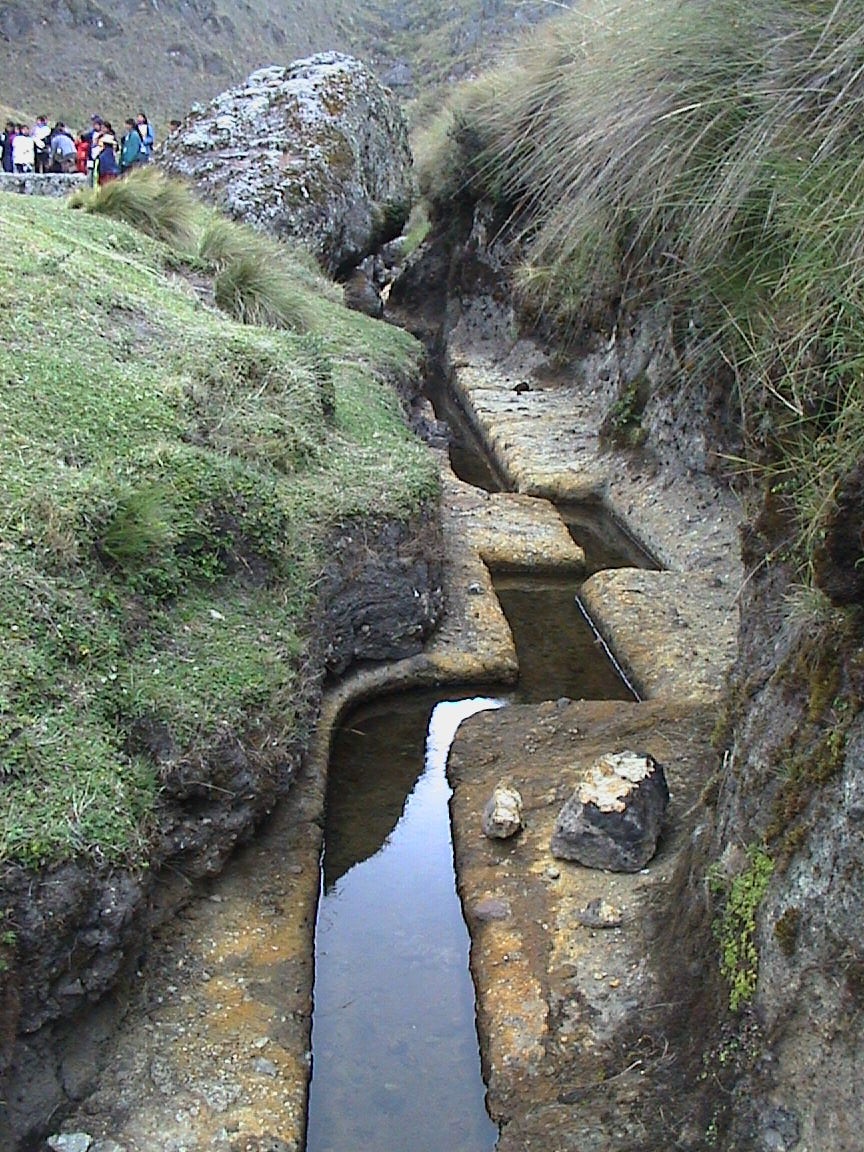
Beyond its undeniable structural and ecological utility, the Cumbemayo canal served as a profound nexus of ritual architecture and sociopolitical cohesion within the ancient Andean world, linking practical survival to divine cosmology. Chronicled oral histories and petroglyphic inscriptions etched into adjacent monolithic rock faces—featuring stylized serpent motifs, celestial alignment markers, and ritual cupules—suggest that the maintenance of the aqueduct was bound to sacred seasonal ceremonies led by priest-astronomers. These rituals were designed to appease subterranean deities and secure the continuous flow of waters essential for sustaining early highland agriculture and nascent urban settlements against unpredictable climatic shifts. The architectural precision of the channel thus symbolized the cosmic order imposed upon chaos, transforming wild mountain runoff into a tamed, sacred resource that bound scattered agrarian communities into a unified geopolitical enтιтy. The structural longevity of these stone troughs, surviving millennia of seismic upheavals and glacial expansion, underscores an advanced indigenous science where material resourcefulness and spiritual devotion formed an unbreakable foundation of regional persistence.

The historical weight of the Cumbemayo aqueduct ultimately compels a radical reᴀssessment of ancient human capability, dismantling outdated colonial dogmas that relegate pre-literate indigenous societies to primitive modes of environmental interaction. The meticulous preservation of this lithic masterpiece within the remote Andean puna provides empirical, unshakeable proof that the ancient builders of South America possessed a sophisticated, systematic comprehension of fluid mechanics, topography, and structural geology centuries prior to European contact. As we declassify and analyze these extraordinary stone conduits, we are forced to recognize that true engineering brilliance is measured not by the presence of written manuals, but by the profound harmony achieved between human intellect and the untamed extremities of the natural world. Cumbemayo remains an enduring, timeless monument to an epoch when water was guided across the roof of the world through the patient, reverent union of human geometry, volcanic stone, and eternal survival.
✓ tuongvien
High within the mist-shrouded volcanic crags of the northern Peruvian highlands near Cajamarca, carved directly into the unyielding basaltic stone more than two millennia ago, the Cumbemayo…